
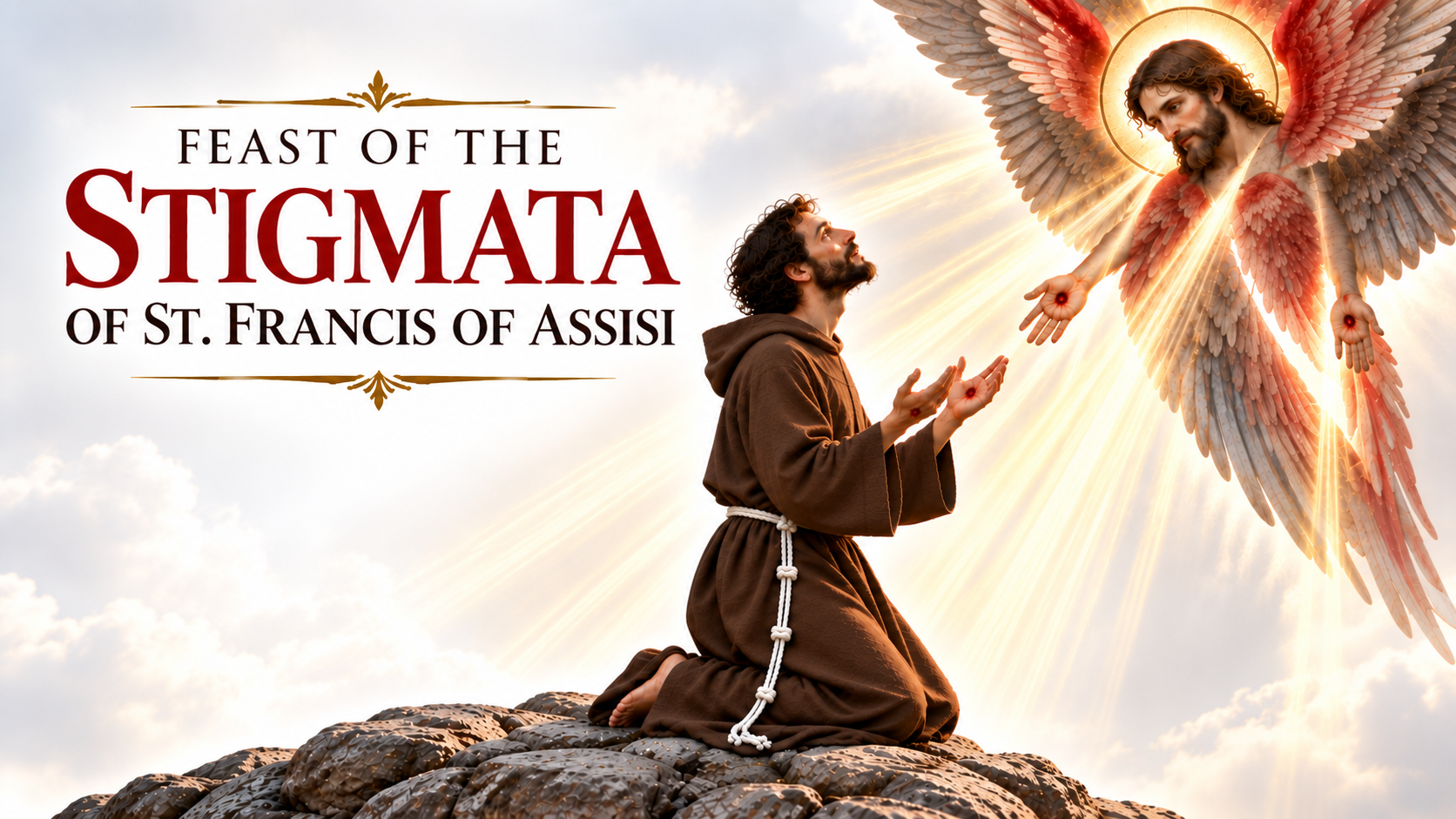
High on Mount La Verna in September 1224, Saint Francis of Assisi experienced a mystical event that forever changed how the world understood devotion. While praying, he received the stigmata—the five wounds of Christ—on his hands, feet, and side. It is easy to look at this moment in history as a glorification of suffering, but to do so misses the profound core of his experience. This was not a punishment or a test of endurance; it was the ultimate expression of intimacy.
Francis hadn’t gone to the mountain to ask for pain; he went seeking to understand the depths of Divine Love. According to historical accounts, he prayed for two things: to feel in his body the physical pain Christ suffered, and to feel in his heart the overwhelming love that made Christ willing to endure it.
The wounds were simply the physical overflow of a heart that had perfectly aligned itself with the object of its devotion. When you love someone completely, you naturally want to share in their burdens. Francis's stigmata were not a badge of suffering, but the marks of a radical, transformative empathy. He had drawn so close to the divine that the boundary between the lover and the beloved dissolved.
For us today, the message requires no literal mountain or physical wounds. In a culture that constantly tells us to shield ourselves, maximize our comfort, and avoid vulnerability at all costs, the Feast of the Stigmata offers a powerful counter-narrative: true love is never insulated.
We are called to a level of intimacy with God and with humanity that is willing to be pierced by the suffering of the world. Whether it is sitting with a grieving friend, bearing the emotional cost of fighting for justice, or simply letting the heartbreak of the world move us to action, we are invited to stop guarding our hearts.
Francis teaches us that when we finally stop protecting ourselves and open our lives entirely to love, the spiritual wounds we bear become the exact places where grace enters the world.