
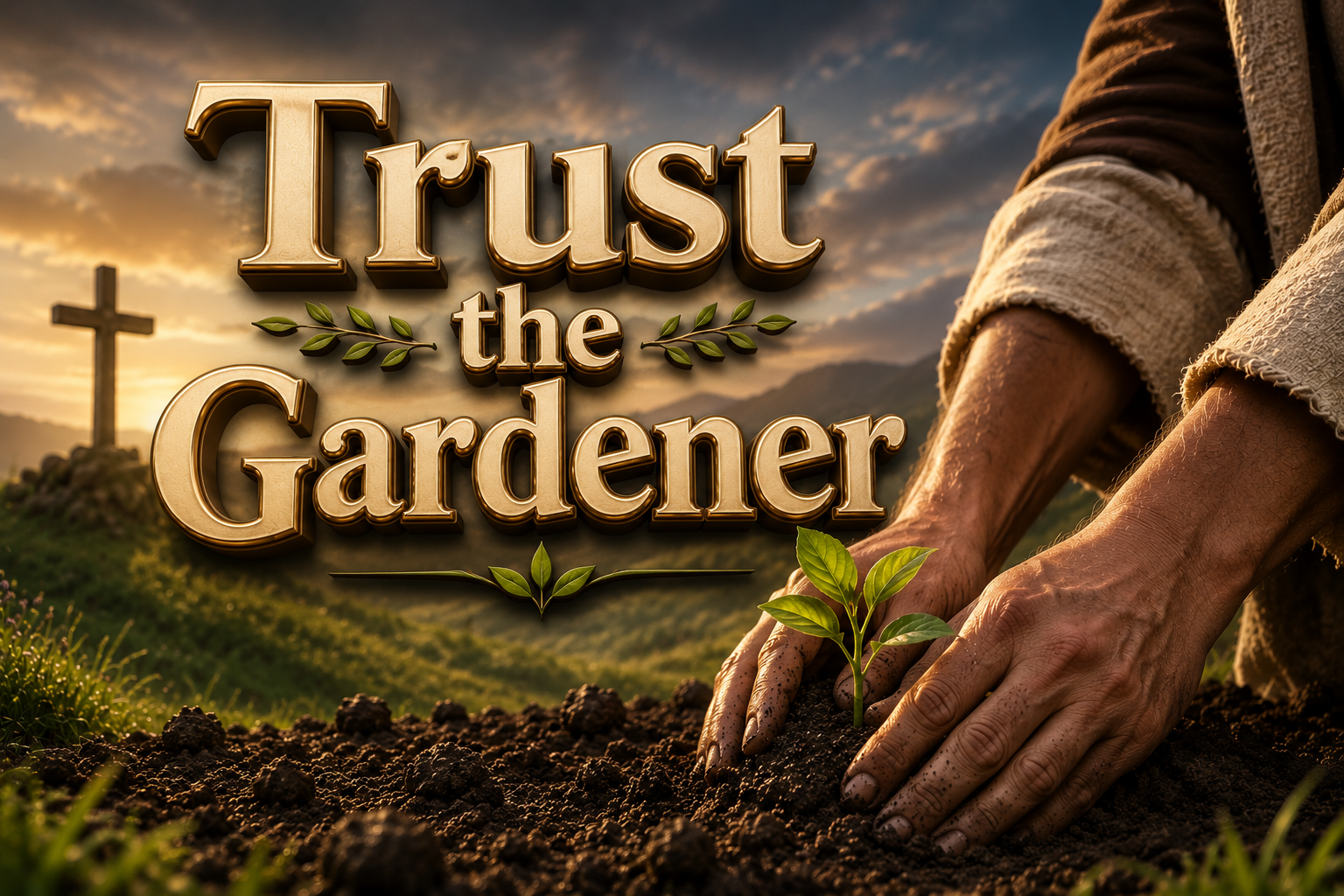
Mathew 13:24-43 There was a Franciscan friar named Brother Ruffino, one of St. Francis' closest companions. Although Brother Ruffino was a holy man, he was troubled by the thought that God had rejected him and that there was no hope for him. He was so ashamed that he kept these thoughts hidden, even from St. Francis. The more he hid them, the more he lost his peace and joy. But one day, God revealed Brother Ruffino's struggle to St. Francis. Francis gently called him and encouraged him to open his heart and trust in God's mercy instead of listening to the lies of the devil. When Ruffino honestly shared his struggle, he experienced a deep peace. What he had hidden in darkness began to lose its power when it was brought into the light. In today's Gospel, we notice that Jesus speaks about a farmer who sowed good seed in his field. But while everyone was asleep, an enemy came and sowed weeds among the wheat. When the servants discovered the weeds, they immediately wanted to pull them out. But the master surprised them by saying, "Let both grow together until the harvest." At first, this seems strange, and we may ask, "Why would a good farmer allow the weeds to remain?" Because he knew that pulling out the weeds too quickly might also uproot the wheat. Friends, every one of us is like that field. God has planted good seed within us, but we also discover weeds. The problem is not that weeds exist. The problem is that we pretend the weeds are not there. We try to hide our weaknesses because we fear rejection or embarrassment. Let us look at the life of St. Paul. St. Paul struggled with his weaknesses, but he never hid them or pretended that everything was fine. Instead, he was honest before God and openly admitted that he had a "thorn in the flesh." Three times he begged the Lord to remove this thorn. But God did not remove it immediately. Instead, God answered, "My grace is sufficient for you, for my power is made perfect in weakness." Paul later made an astonishing confession: "When I am weak, then I am strong." Here we see that Paul did not become discouraged by his weaknesses. He knew both his strengths and his weaknesses. He did not allow his weaknesses to destroy the good that God had planted in him. Instead, he entrusted his weaknesses—his weeds—to God and patiently allowed God to work in him in His own time. We are all a mixture of wheat and weeds. We are, at the same time, saints and sinners. Perhaps the question today is not, "How can I get rid of every weed immediately?" but rather, "Am I allowing God to keep growing the wheat in my life?" So let us come honestly before the Lord with our whole field, trusting that His grace is patiently at work. If we stay close to Christ in prayer, the Eucharist, and the Sacrament of Reconciliation, God will patiently transform our weeds into a rich harvest. Amen.